
Anxiety and Addiction Treatment: Integrated Care for Co-Occurring Disorders
Anxiety disorders and substance use disorders can occur together and sometimes make each other harder to manage.
A person may use alcohol or drugs in an attempt to calm worry, panic, social fear, insomnia, or physical tension. At the same time, substance use, intoxication, withdrawal, sleep disruption, and the consequences of addiction can worsen anxiety or produce anxiety-like symptoms.
When someone has both a mental-health disorder and a substance use disorder, clinicians commonly refer to these as co-occurring disorders or a dual diagnosis.
Treatment generally works best when both conditions are assessed and addressed together rather than assuming anxiety must wait until addiction treatment is finished. SAMHSA recommends integrated care because coordinated mental-health and substance-use treatment can improve quality of care and outcomes. SAMHSA
For a broader overview, see our dual diagnosis treatment guide.

How Are Anxiety and Addiction Treated Together?
Anxiety and addiction treatment may combine psychotherapy, substance use treatment, psychiatric care, appropriate medications, coping-skills training, recovery support, and treatment for other medical or social needs.
Cognitive behavioral therapy is commonly used for anxiety and may also help people recognize triggers and behaviors related to substance use. Other approaches can include motivational treatment, acceptance-based therapies, group counseling, family support, and individualized addiction treatment.
Medication may also be appropriate for an anxiety disorder or substance use disorder, but medication choices need to consider the person's substance-use history, other prescriptions, medical conditions, and potential interactions.
The exact plan depends on the type and severity of anxiety, substance involved, withdrawal risk, physical health, previous treatment, daily functioning, and personal preferences.
How Common Are Anxiety Symptoms and Substance Use?
The latest national data show a meaningful relationship between anxiety symptoms and substance use.
U.S. adults—6.6% of adults—had moderate or severe symptoms of generalized anxiety disorder during the previous two weeks in the 2025 National Survey on Drug Use and Health.
Among adults ages 18 to 25, 12.2% had moderate or severe symptoms during the previous two weeks. These numbers show an association, not proof that anxiety caused substance use or vice versa. SAMHSA
What Types of Anxiety Can Occur With Addiction?
“Anxiety” is not one single diagnosis.
The symptoms and treatment needs can be different, and substances may affect these conditions differently. For this reason, treatment should identify the specific anxiety problem rather than treating every experience of nervousness as the same disorder.
Why Do Anxiety and Addiction Occur Together?
There is no single cause.
Short-Term Relief
Some people use alcohol, sedatives, cannabis, opioids, or other substances because they temporarily feel less anxious. This is often described as self-medication.
Longer-Term Anxiety
Repeated substance use can change sleep, mood, stress response, relationships, and everyday functioning. Withdrawal from some substances can also produce or intensify anxiety.
Overlapping Vulnerabilities
Trauma, chronic stress, genetics, environment, and other mental-health conditions may contribute to both disorders.
Treatment should focus on breaking that cycle rather than assuming only one condition needs attention.
Can Alcohol or Drugs Cause Anxiety Symptoms?
Anxiety Symptoms Do Not Always Mean an Independent Anxiety Disorder
Yes.
Intoxication, withdrawal, medication effects, sleep deprivation, and substance-related stress can all produce anxiety symptoms.
Stimulants such as cocaine or methamphetamine can contribute to nervousness, agitation, panic-like symptoms, or paranoia.
Alcohol withdrawal can include significant anxiety, and benzodiazepine withdrawal can also cause intense anxiety and potentially serious medical complications.
SAMHSA's co-occurring-disorder guidance emphasizes careful assessment because mental-health symptoms may be independent conditions, substance induced, or a combination of both. SAMHSA
A person's diagnosis may become clearer as treatment progresses, but significant anxiety should not simply be ignored because substance use is also present.
How Does Treatment Begin?
Treatment usually starts by looking at both substance use and anxiety.
A clinician may ask when anxiety began, whether symptoms existed before substance use, what happens during periods of lower or no substance use, which substances are involved, whether withdrawal is occurring, and how symptoms affect sleep, work, relationships, and safety.
The assessment may also review physical health, medications, previous psychiatric treatment, previous addiction treatment, trauma history, and other mental-health symptoms.
This information helps determine both the diagnosis and appropriate level of care.
Someone with severe withdrawal risk may need stabilization first, while someone who is medically stable may begin integrated outpatient treatment.
For more information about the overall process, see how rehab works.

What Therapy Is Used for Anxiety and Addiction?
Cognitive behavioral therapy helps people examine patterns of thinking, behavior, avoidance, and emotional responses.
NIMH describes CBT as a well-studied treatment and a gold-standard psychotherapy for generalized anxiety disorder. NIMH
ACT uses acceptance, mindfulness, and values-based action. NIMH identifies ACT as another treatment option for generalized anxiety disorder.
Treatment may include motivational interviewing, relapse-prevention work, group therapy, family services, peer support, or other addiction-specific interventions.
The goal is not to eliminate every uncomfortable feeling before recovery can begin. Treatment helps people learn safer ways to respond to anxiety while also addressing the substance use disorder.

Can Medication Be Used for Anxiety During Addiction Treatment?
Yes.
For generalized anxiety disorder, NIMH identifies antidepressants such as SSRIs and SNRIs, as well as other anxiety medications, among possible treatment options. Medication choice depends on the person's diagnosis, health, preferences, and clinical circumstances. NIMH
For more information about addiction medications, see medication-assisted treatment.
This page does not recommend a specific anxiety medication or medication combination. Prescribing decisions require individualized medical assessment.
What About Benzodiazepines for Anxiety?
Benzodiazepines can reduce anxiety quickly and have legitimate medical uses, but they require particular caution when someone has a current or past substance use disorder.
FDA requires boxed warnings for benzodiazepines because of risks including misuse, addiction, physical dependence, and withdrawal. Combining benzodiazepines with opioids or alcohol can also increase the risk of dangerous sedation, respiratory depression, coma, and death. FDA
This does not mean every person with a substance use disorder must automatically be denied all anxiety medication.
It means anxiety treatment should be carefully individualized, with the prescribing clinician considering safer alternatives, medication history, other substances, and risks and benefits.
Readers concerned about problematic benzodiazepine use can review benzodiazepine addiction treatment.
Does Someone Need Detox Before Anxiety Treatment?
No universal rule applies.
Withdrawal Management
Some people need withdrawal management because alcohol, benzodiazepines, opioids, or other substances may cause clinically significant withdrawal.
Anxiety Treatment
Other people can begin anxiety and addiction treatment directly in an outpatient setting. Mental-health care does not necessarily need to wait until every withdrawal symptom has disappeared.
Anxiety and safety may need monitoring throughout withdrawal and early recovery.
The drug detox programs guide explains withdrawal-management services in more detail.
What If Anxiety Gets Worse After Stopping Drugs or Alcohol?
Anxiety can sometimes increase temporarily during early recovery.
Withdrawal, sleep disruption, stress, changes in routine, and losing a substance that had been used to cope can all contribute.
That does not automatically mean treatment is failing.
The treatment team may need to reassess the anxiety diagnosis, withdrawal, sleep, therapy plan, medications, level of care, or other contributing factors.
Persistent or severe anxiety may reflect an independent anxiety disorder requiring ongoing mental-health treatment.
The important approach is reassessment rather than assumption.
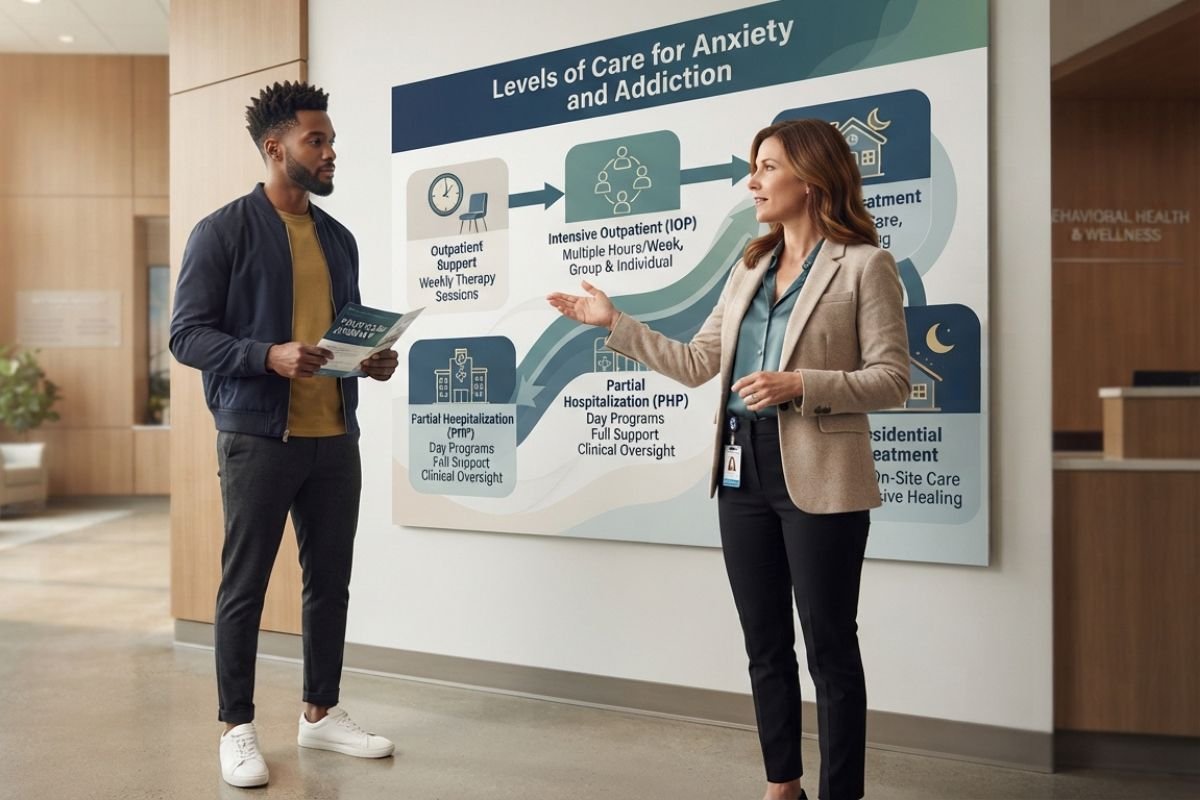
What Level of Care Is Appropriate?
Having anxiety and addiction does not automatically mean someone needs residential treatment.
More intensive care may be appropriate when substance use is severe, the living environment is unsafe, withdrawal requires significant support, psychiatric symptoms substantially affect functioning, or lower-intensity treatment cannot meet the person's needs.
Some people may benefit from residential treatment.
Others can receive integrated care through a Partial Hospitalization Program, Intensive Outpatient Program, or standard outpatient drug rehab.
Treatment intensity should change when clinical needs change.
When Is Anxiety a Crisis?
Anxiety can be extremely distressing without necessarily being a medical emergency.
However, urgent help is appropriate when anxiety occurs alongside suicidal thoughts, an inability to remain safe, severe confusion, psychosis, dangerous intoxication, serious withdrawal symptoms, or another immediate safety problem.
Chest pain, seizures, loss of consciousness, serious breathing problems, suspected overdose, or other medical emergencies also require immediate attention.
What Happens After Intensive Treatment?
Anxiety and addiction may both require ongoing care after someone completes residential treatment, PHP, or IOP.
Continuing treatment may include individual therapy, psychiatric appointments, addiction counseling, medication management, peer support, primary care, family services, or recovery housing.
SAMHSA recommends integrated, individualized care for co-occurring disorders rather than treating one condition in isolation. SAMHSA
A return of anxiety symptoms or substance use should trigger reassessment and adjustment of the care plan rather than automatically being treated as proof that all treatment has failed.
How to Choose an Anxiety and Addiction Treatment Program
Ask whether the program actually treats anxiety disorders or simply refers every mental-health concern elsewhere.
Are anxiety and substance use both assessed from the start?
Which therapies and psychiatric services are available?
How is the substance use disorder addressed?
How are psychiatric and addiction medications coordinated?
What happens when anxiety, withdrawal, or safety risks worsen?
How are step-down, step-up, and long-term follow-up coordinated?
Ask which therapies are available, whether psychiatric evaluation is offered, how medications are coordinated, and how clinicians distinguish substance-induced anxiety from an independent anxiety disorder.
If benzodiazepines are involved, ask how the program evaluates dependence and withdrawal safely rather than requiring abrupt medication discontinuation.
Also ask what happens when anxiety worsens, substance use returns, or the current level of care no longer meets the person's needs.
Does Insurance Cover Anxiety and Addiction Treatment?
Insurance may cover treatment for anxiety, substance use disorders, or both, but exact benefits vary by plan.
Readers can use verify insurance for rehab to explore potential treatment benefits or review how much rehab costs for broader payment information.
Frequently Asked Questions About Anxiety and Addiction Treatment
Can anxiety and addiction be treated at the same time?
Yes. SAMHSA recommends integrated care for co-occurring mental-health and substance-use disorders. SAMHSA
Can alcohol or drugs cause anxiety?
Yes. Intoxication, withdrawal, sleep disruption, and substance-related stress can produce or worsen anxiety symptoms.
Can anxiety lead to drug or alcohol use?
Some people use substances in an attempt to reduce worry, panic, tension, or other anxiety symptoms. However, the relationship between anxiety and addiction is complex and cannot always be explained by self-medication alone.
What therapy is used for anxiety and addiction?
CBT is commonly used and can address anxiety symptoms as well as thoughts and behaviors connected with substance use. Other treatment may include ACT, motivational therapy, group counseling, family services, and addiction-focused therapies. NIMH
Can medication be used for anxiety during addiction recovery?
Yes, when clinically appropriate. Medication decisions should consider the anxiety diagnosis, substance-use history, current substances, other medications, and medical conditions.
Are benzodiazepines safe for someone with addiction?
Benzodiazepines have legitimate medical uses but also carry risks of misuse, physical dependence, and dangerous interactions, particularly with opioids or alcohol. Their use requires individualized medical evaluation. FDA
Can anxiety get worse during withdrawal?
Yes. Anxiety can occur or worsen during withdrawal from several substances. Severe or persistent symptoms should be assessed rather than assumed to be temporary.
Does everyone need residential treatment?
No. Anxiety and addiction can be treated at residential, PHP, IOP, or standard outpatient levels depending on safety, symptoms, substance use, functioning, and recovery environment.
Is anxiety the same as normal stress?
No. Everyone experiences anxiety at times, but an anxiety disorder involves symptoms that are persistent, difficult to control, and significant enough to affect daily functioning.
Explore Anxiety and Addiction Treatment Options
Anxiety and substance use can reinforce one another, but effective treatment does not have to choose one problem and ignore the other.
Integrated care can address anxiety, substance use, medications, physical health, daily functioning, safety, and recovery needs through one coordinated plan.
Important Safety Information
This page provides general educational information about anxiety disorders, substance use disorders, and co-occurring treatment. It is not a diagnosis, psychiatric evaluation, medication recommendation, or individualized treatment plan.
Do not start, stop, or change prescription anxiety medication based solely on this page. Benzodiazepines should not be stopped abruptly after regular use without appropriate medical guidance.