Home → Alcohol Addiction Treatment
Alcohol Use Disorder Treatment

Alcohol Addiction Treatment: Detox, Rehab, Medications, and Recovery

Alcohol addiction is clinically called alcohol use disorder (AUD). It is a medical condition in which a person has difficulty stopping or controlling alcohol use despite negative effects on health, relationships, work, safety, or other parts of life.

AUD can range from mild to severe. Treatment is not limited to residential rehab or Alcoholics Anonymous, and there is no single approach that works for everyone. Modern alcohol treatment can include medical withdrawal management, behavioral therapy, FDA-approved medications, outpatient or residential care, mental health treatment, mutual-support groups, and continuing recovery services. NIAAA

Find Drug Rehab Options provides general educational information and treatment-matching support. We do not provide medical advice, diagnosis, or treatment.
Adult discussing alcohol addiction treatment with a behavioral health professional
Quick Answer

How Is Alcohol Addiction Treated?

Alcohol addiction treatment usually begins with an assessment of drinking patterns, withdrawal risk, physical health, mental health, medications, previous treatment, and the person's goals.

Some people need medically supported alcohol withdrawal management before continuing treatment because suddenly stopping after prolonged heavy drinking can become dangerous. Others may begin directly with outpatient counseling, medication, or another appropriate level of care.

Professional treatment can include behavioral therapies and medications such as naltrexone, acamprosate, or disulfiram. These medications are nonaddictive and may be used alone or together with behavioral treatment and recovery support. NIAAA

For readers who want to understand the broader treatment journey, the how rehab works guide explains assessment, treatment planning, levels of care, and continuing support.

Understanding AUD

What Is Alcohol Use Disorder?

Alcohol use disorder is characterized by an impaired ability to control or stop drinking despite harmful social, occupational, or health consequences. It exists on a spectrum and can be mild, moderate, or severe. NIAAA

A person may repeatedly drink more or longer than intended, try unsuccessfully to reduce drinking, experience strong cravings, spend substantial time drinking or recovering from alcohol, or continue drinking even when it is causing significant problems.

Alcohol may also begin interfering with responsibilities, relationships, physical health, mental health, or personal safety.

Tolerance and withdrawal can be part of the picture, but a website checklist cannot diagnose AUD.

A qualified healthcare or addiction professional can assess the person's overall drinking pattern and determine whether treatment may be appropriate.

2024 U.S. Data

How Common Is Alcohol Use Disorder?

27.9 million people aged 12 or older in the United States had alcohol use disorder during the past year in 2024.
697,000 / 2.5% of people with past-year AUD received medication for alcohol use disorder during 2024.

The 2024 National Survey on Drug Use and Health estimated that 27.9 million people aged 12 or older in the United States had alcohol use disorder during the past year, representing about 9.7% of that population. SAMHSA

Despite how common AUD is, medication treatment remains underused.

Among those 27.9 million people with past-year AUD, only about 697,000 people, or 2.5%, received medication for alcohol use disorder during 2024. SAMHSA

That gap is important because medications are established evidence-based treatment options and can be prescribed in general healthcare as well as addiction-treatment settings.

Starting Care

How Does Alcohol Addiction Treatment Begin?

Treatment should begin with an individualized assessment rather than automatically placing everyone into the same 28- or 30-day program.

A healthcare professional may review how much and how often the person drinks, previous withdrawal symptoms, history of seizures or other complications, physical health, medications, mental health symptoms, other substance use, previous treatment, living environment, support system, and treatment goals.

This information helps determine whether alcohol withdrawal requires medical monitoring and which level of ongoing treatment may be appropriate.

Someone may need inpatient withdrawal management followed by residential care. Another person may be able to receive treatment while continuing to live at home.

The site's what drug rehab is guide provides a broader explanation of how addiction treatment can involve several different settings and services.

Clinician assessing alcohol addiction treatment needs with an adult patient
1
Assessment
2
Withdrawal & Safety
3
Treatment Plan
4
Progress Review
5
Continuing Care
Withdrawal Safety

Why Alcohol Withdrawal Needs Special Attention

Alcohol withdrawal is particularly important because it can sometimes become medically dangerous.

When someone who has been drinking heavily for a prolonged period suddenly stops, withdrawal can involve tremors, sweating, sleep problems, anxiety, nausea, elevated pulse or blood pressure, seizures, or delirium tremens in severe cases. NIAAA

NIAAA notes that alcohol withdrawal can be life threatening and that some patients require medical monitoring or detoxification rather than attempting to stop without professional support. NIAAA

The appropriate setting depends on individual risk.

Some people may be managed in outpatient withdrawal care, while people at risk for serious complications may need more intensive medical monitoring.

This page should not provide a do-it-yourself detox schedule or tell someone exactly how quickly to reduce alcohol.

The site's drug detox programs guide can provide a broader explanation of medically supported withdrawal management.

Do Not Assume Alcohol Withdrawal Is Always Safe to Manage Alone.
Detox vs Ongoing Care

Is Alcohol Detox the Same as Alcohol Rehab?

No.

Alcohol Detox

Alcohol detox or withdrawal management primarily focuses on immediate medical safety and helping the person through withdrawal.

Ongoing AUD Treatment

Alcohol addiction treatment addresses the broader disorder, including cravings, drinking triggers, mental health conditions, relationships, daily routines, recovery goals, and other factors that contribute to continued alcohol use.

Detox should therefore be understood as one possible starting phase, not automatically as complete treatment.

A person may transition from withdrawal management into residential rehab, partial hospitalization, intensive outpatient treatment, standard outpatient care, medication management, or another appropriate service.

Medication Treatment

What Medications Are Used to Treat Alcohol Addiction?

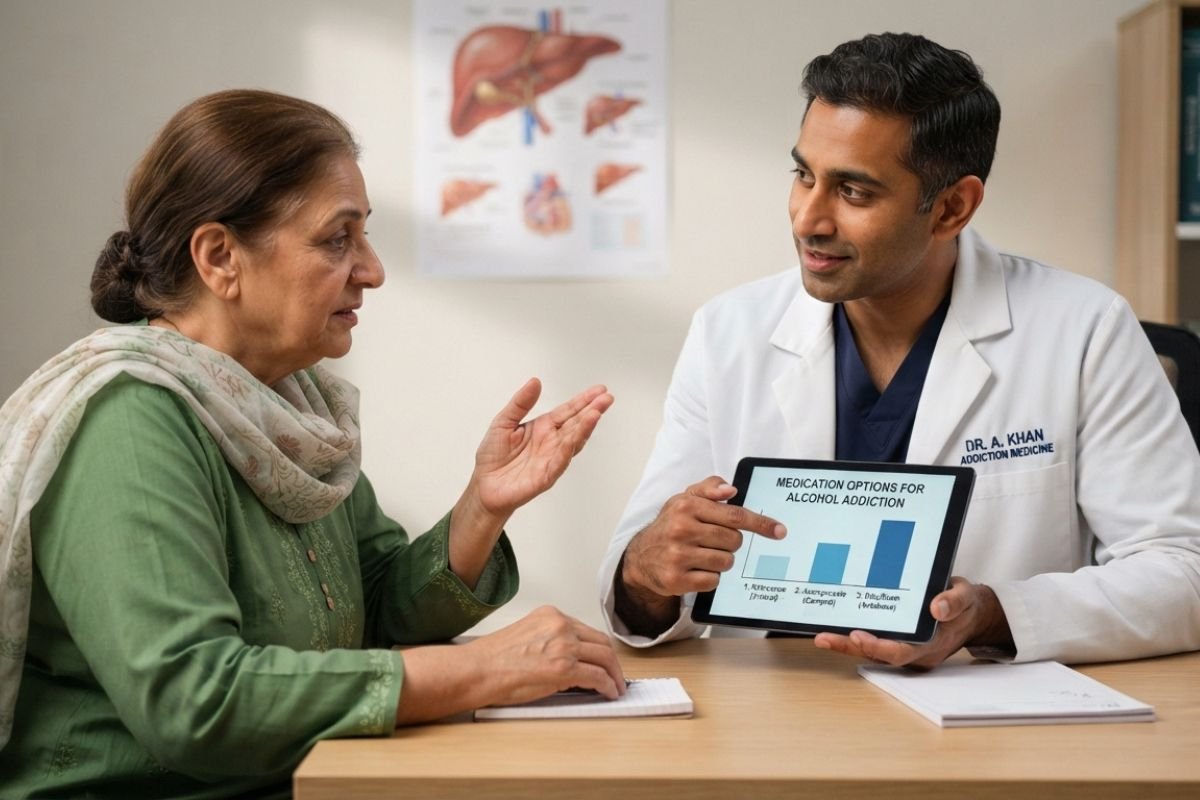
Three medications are FDA-approved in the United States for treating alcohol use disorder: naltrexone, acamprosate, and disulfiram. NIAAA notes that these medications are nonaddictive and may be used alone or together with behavioral treatment. NIAAA

Clinician discussing medications used for alcohol addiction treatment
AUD Medication

Naltrexone

Naltrexone can reduce alcohol's rewarding effects and may help reduce heavy drinking or support treatment goals.

It is available in oral and extended-release injectable forms.

Because naltrexone also blocks opioid receptors, current or anticipated opioid use is an important clinical consideration that should be discussed with the prescriber.

AUD Medication

Acamprosate

Acamprosate is used to help support continued abstinence after a person has stopped drinking.

It is part of ongoing AUD treatment rather than a medication for managing acute alcohol withdrawal.

AUD Medication

Disulfiram

Disulfiram works differently. It interferes with alcohol metabolism and can cause an unpleasant and potentially serious reaction if alcohol is consumed.

It may be appropriate for selected patients when avoiding alcohol is a treatment goal.

Medication selection should be individualized based on medical history, treatment goals, other medications, liver or kidney health when relevant, and other clinical factors.

The site's medication-assisted treatment guide can be used for a broader explanation of medications used in addiction care.

Behavioral Treatment

What Role Does Therapy Play in Alcohol Treatment?

Behavioral treatment can help people understand drinking patterns and build practical strategies for change.

NIAAA identifies several evidence-based approaches, including cognitive-behavioral strategies, motivational enhancement, mindfulness-based treatment, contingency management, 12-step facilitation, and couples or family therapy. NIAAA

Therapy may focus on cravings, stress, emotional triggers, relationships, problem-solving, coping strategies, motivation, and planning for situations where drinking is more likely.

The right treatment approach depends on the individual rather than every person receiving exactly the same therapy.

Mutual-support groups can also provide an additional layer of support and may be used alongside professional treatment. NIAAA

Recognize Triggers
Build Skills
Support Change
Level of Care

Does Alcohol Addiction Always Require Inpatient Rehab?

No. Alcohol addiction can be treated across several levels of care.

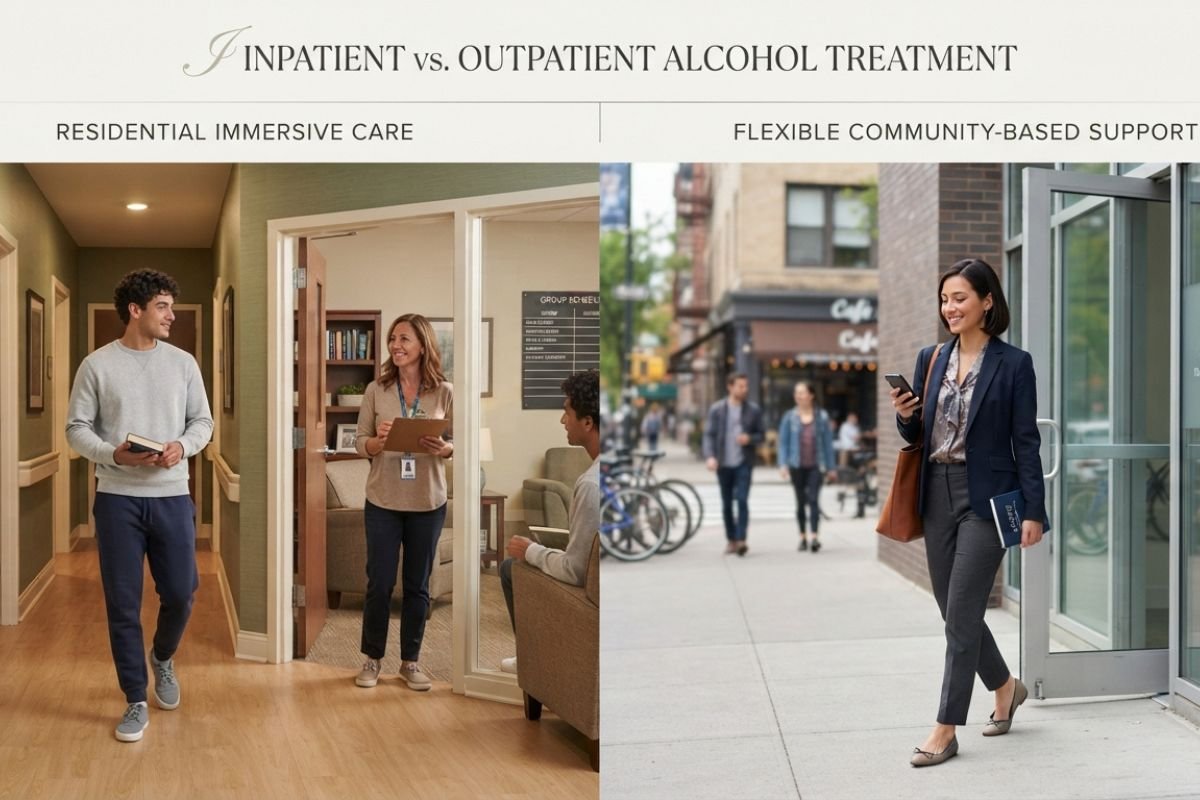
Residential / Inpatient

Residential or inpatient treatment may be appropriate when someone needs a structured living environment, has significant withdrawal risk, has complex medical or psychiatric needs, or cannot be treated safely in a less intensive setting.

The site's inpatient drug rehab guide explains residential treatment and structured daily care in more depth.

Outpatient

Outpatient treatment allows the person to live outside the treatment facility while attending scheduled counseling, medical visits, medication appointments, or other services.

Depending on the person's needs, outpatient treatment may range from a few scheduled appointments to intensive outpatient or partial-hospitalization programming.

The outpatient drug rehab guide provides more detail on those levels of care.

A higher level of care is not automatically “better.” Treatment intensity should match the person's actual clinical needs.

Comparison of inpatient and outpatient alcohol addiction treatment settings
Co-Occurring Conditions

What If Mental Health Problems Are Also Present?

Depression, anxiety, PTSD, bipolar disorder, and other mental health conditions can occur alongside alcohol use disorder.

Alcohol can also worsen certain psychiatric symptoms, interfere with sleep, affect medications, and complicate diagnosis.

When both conditions are present, treatment should consider both rather than assuming the mental health problem will disappear once drinking changes.

Treatment may include alcohol counseling, psychiatric care, medication, psychotherapy, case management, and other coordinated services.

The site's dual diagnosis treatment guide provides a deeper explanation of integrated mental-health and addiction care.

Alcohol Use Disorder
Mental Health
Integrated Care
Continuing Care

What Happens After Alcohol Rehab?

Leaving residential treatment or finishing an intensive outpatient program does not necessarily mean treatment is complete.

Continuing care may include outpatient counseling, medication for AUD, mental health services, primary care, mutual-support groups, peer recovery support, case management, or other services.

Recovery can include setbacks, and a return to drinking should prompt reassessment rather than automatically being treated as proof that all previous treatment failed.

NIAAA notes that many people with AUD recover and that behavioral treatment, medications, and ongoing support can help people manage risks for returning to drinking. NIAAA

Continuing care planning after alcohol rehab
Initial Treatment
Step-Down Care
Continuing Support
Long-Term Recovery
Program Verification

How Do You Choose an Alcohol Treatment Program?

A treatment center should be able to explain how it assesses alcohol use disorder and withdrawal risk before recommending a level of care.

Withdrawal Safety

Ask whether medical withdrawal management is available or coordinated when necessary.

AUD Medications

Ask whether the program offers or coordinates FDA-approved medications for AUD.

Therapy

Ask what behavioral therapies are provided and how treatment is individualized.

Mental Health

Ask how co-occurring mental health conditions are assessed and treated.

Continuing Care

Ask what treatment and recovery support continue after discharge.

“How does your program decide whether I need detox, medication, residential treatment, or outpatient care?”

A program should be able to answer that based on individual needs rather than simply offering the same treatment package to everyone.

Coverage

Does Insurance Cover Alcohol Addiction Treatment?

Health insurance may cover alcohol use disorder treatment, but benefits differ by plan.

Treatment Benefits
Medication Benefits

Withdrawal management, residential treatment, outpatient care, therapy, physician visits, mental health services, and prescription medications may all be handled differently.

Provider network status, medical-necessity requirements, prior authorization, deductibles, copayments, and coinsurance can affect what someone pays.

Readers can use the site's verify insurance for rehab resource to explore benefits or review how much rehab costs for a broader explanation of treatment expenses.

Insurance verification does not guarantee admission, authorization, payment, or final patient responsibility.
FAQ

Frequently Asked Questions About Alcohol Addiction Treatment

Is alcohol addiction treatable?

Yes. Alcohol use disorder is treatable with behavioral therapies, medication, different levels of professional treatment, and ongoing recovery support. NIAAA

Is alcohol withdrawal dangerous?

It can be. Severe withdrawal can include seizures and delirium tremens and may require medical monitoring. Someone concerned about withdrawal should seek professional guidance rather than relying on a generic online detox plan. NIAAA

Does everyone with alcohol addiction need detox?

No. The need for medically supported withdrawal depends on drinking patterns, previous withdrawal, health conditions, medications, and other individual factors.

What medications are used for alcohol addiction?

FDA-approved medication options include naltrexone, acamprosate, and disulfiram. NIAAA

Do you have to go to inpatient rehab for alcohol addiction?

No. Treatment may occur in residential, partial-hospitalization, intensive outpatient, or standard outpatient settings depending on the person's needs.

Is detox the same as rehab?

No. Detox primarily addresses withdrawal and immediate stabilization. Ongoing AUD treatment addresses drinking patterns, cravings, behavior, mental health, and recovery planning.

Can alcohol addiction be treated without medication?

Yes. Behavioral treatments can be effective, and not everyone uses medication. However, medication is an evidence-based option that should not be overlooked simply because a program focuses mainly on counseling.

Can alcohol addiction and depression be treated together?

Yes. When both are present, coordinated treatment may address the alcohol use disorder and mental health condition together.

How long does alcohol treatment last?

There is no universal duration. Treatment length depends on clinical needs, progress, level of care, support system, and continuing-care needs.

What should I do if someone has severe alcohol withdrawal symptoms?

Seizures, severe confusion, hallucinations, loss of consciousness, or another medical emergency require urgent medical attention. In the United States, call 911.

Explore Care

Explore Alcohol Addiction Treatment Options

You do not need to know in advance whether detox, medication, inpatient rehab, outpatient treatment, or another option is the appropriate starting point.

Treatment can be explored based on drinking patterns, withdrawal risk, physical and mental health, previous treatment, living environment, location, and insurance circumstances.

Find Drug Rehab Options provides general educational and treatment-matching information. We do not diagnose alcohol use disorder, prescribe medication, or provide medical treatment. Exploring options does not guarantee treatment placement or insurance coverage.
Written By: Find Drug Rehab Options Editorial Team
Last Updated: September 2026
Important Information

Medical and Emergency Disclaimer

This page provides general educational information about alcohol use disorder, withdrawal, detox, medications, rehab, and recovery.

It is not medical advice and should not be used to diagnose AUD, determine medication use, or create a self-directed alcohol detox or tapering plan.

Questions about heavy alcohol use, withdrawal, medications, pregnancy, mental health symptoms, or treatment decisions should be discussed with an appropriately qualified healthcare professional.

Severe alcohol withdrawal can be a medical emergency. If someone in the United States is experiencing seizures, severe confusion, loss of consciousness, difficulty breathing, or another medical emergency, call 911 immediately.

If someone is experiencing a mental health, suicide, or substance-use crisis, call or text 988.