
Medication-Assisted Treatment (MAT): How It Works, Medications, and Recovery
Medication-assisted treatment, commonly called MAT, uses medications as part of treatment for certain substance use disorders.
The term is most often associated with opioid use disorder, but medications are also available for alcohol use disorder. Treatment may also include counseling, mental health care, medical services, case management, peer support, and other recovery services depending on the person's needs.
For opioid use disorder, FDA-approved medication options include buprenorphine, methadone, and naltrexone. For alcohol use disorder, medications include naltrexone, acamprosate, and disulfiram. FDA
Medication is not simply a temporary tool for getting through withdrawal. For many people, it is a central part of evidence-based treatment and may continue for months, years, or longer.
The right medication and treatment setting depend on the substance involved, medical history, current substance use, previous treatment, pregnancy when relevant, other medications, mental health needs, treatment access, and individual preferences.

What Is Medication-Assisted Treatment?
Medication-assisted treatment traditionally refers to using medication together with counseling, behavioral healthcare, and other supportive services to treat substance use disorders.
However, terminology in addiction medicine has changed.
Medication-Assisted Treatment
A familiar umbrella term that remains widely recognized by patients, families, treatment centers, insurers, and search engines.
Medications for Opioid Use Disorder
A more specific term for medications used to treat opioid use disorder.
Medications for Alcohol Use Disorder
A more specific term for medications used to treat alcohol use disorder.
SAMHSA explains that MOUD and MAT are not identical terms and notes that medications such as methadone and buprenorphine can be integral treatment rather than something that merely assists counseling. SAMHSA
Throughout this guide, MAT is used as the familiar umbrella term, while MOUD and MAUD are used when discussing specific medications for opioid or alcohol use disorder.
What Substance Use Disorders Can Be Treated With Medication?
Medication is not available for every substance use disorder.
Current FDA-approved medications are particularly important in treating opioid use disorder and alcohol use disorder.
Opioid Use Disorder
Medication can be used when problematic opioid use involves fentanyl, heroin, prescription opioids, or other opioids.
See the opioid addiction treatment guide for broader OUD treatment information.
Alcohol Use Disorder
Medication may help reduce drinking, support abstinence, reduce cravings, or create a strong deterrent to alcohol use depending on the medication selected.
See the alcohol addiction treatment guide for broader AUD treatment information.
Treatment for stimulant, cannabis, and some other substance use disorders relies more heavily on behavioral and psychosocial approaches because there are currently no equivalent FDA-approved medications specifically treating those disorders in the same way.
How Does Medication Treatment Work?
Different addiction medications work in different ways.
Because the medications work differently, there is no single MAT experience that applies to everyone.
A person receiving methadone for opioid use disorder may have a very different treatment process from someone receiving naltrexone for alcohol use disorder.
Even two people with the same diagnosis may receive different medication because of their health, previous treatment experiences, preferences, treatment access, and other circumstances.
The purpose is not simply to make someone “feel better” temporarily. The larger goal is to reduce substance-related harm, improve stability, support engagement in treatment, and create an opportunity to improve health and everyday functioning.
What Medications Are Used for Opioid Use Disorder?
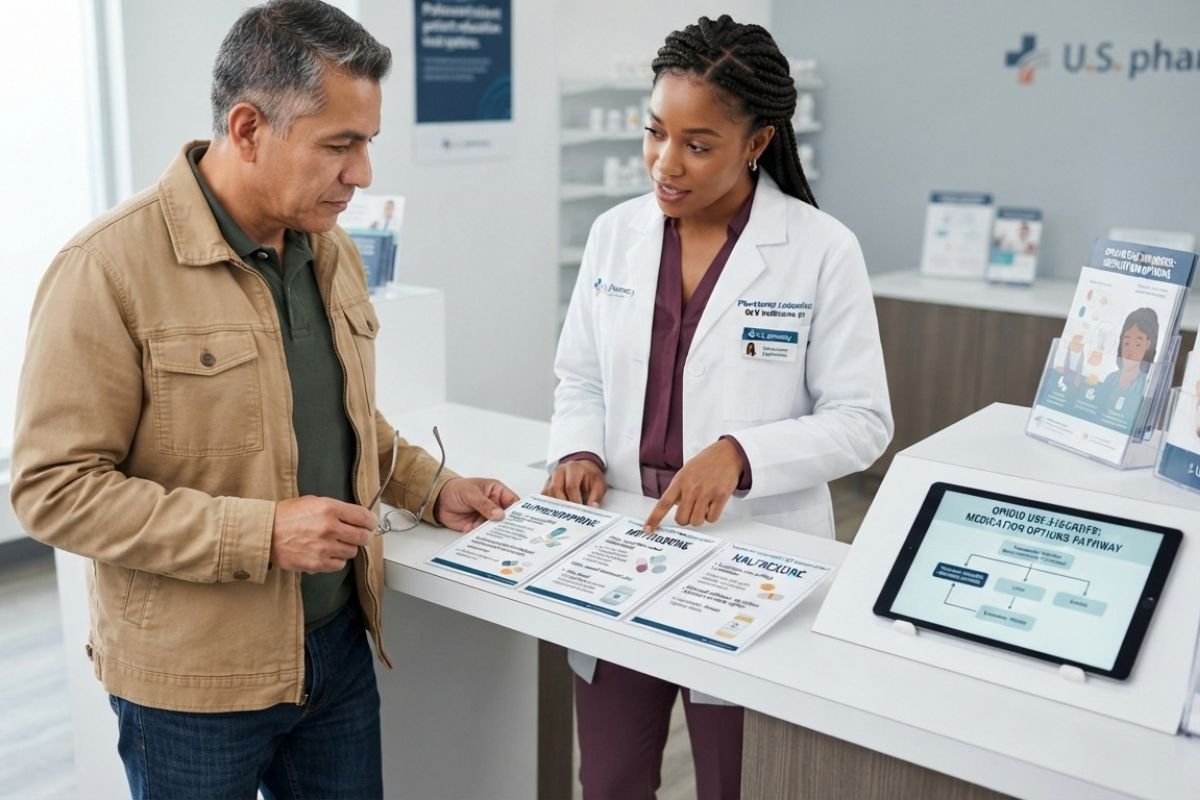
The FDA has approved three medication categories for treating opioid use disorder: buprenorphine, methadone, and naltrexone. All three are evidence-based treatment options, but they differ substantially in how they work and how treatment is accessed. FDA
Buprenorphine
Partial Opioid AgonistBuprenorphine can reduce withdrawal and cravings while producing less opioid-receptor activation than full opioid agonists.
It is available in several formulations, including tablets, films, and long-acting injectable products.
Some products combine buprenorphine with naloxone. Suboxone is one familiar brand-name example.
Clinicians no longer need the old federal DATA X-waiver to prescribe buprenorphine for OUD. SAMHSA removed its former X-waivered practitioner search in June 2026 because that waiver system is no longer relevant. SAMHSA
Methadone
Full Opioid AgonistMethadone is a long-acting full opioid agonist that can reduce withdrawal and cravings and help stabilize opioid use.
In the United States, methadone used specifically to treat OUD is generally provided through a SAMHSA-certified Opioid Treatment Program, or OTP. FDA
Current federal OTP rules allow more individualized use of take-home methadone and greater flexibility in treatment access. SAMHSA
Naltrexone
Opioid AntagonistNaltrexone blocks opioid receptors rather than activating them.
Extended-release injectable naltrexone is FDA-approved for opioid use disorder.
Naltrexone does not treat active opioid withdrawal. A person generally needs an appropriate opioid-free period before beginning treatment because starting it while opioids are still present can trigger severe withdrawal.
That transition should be managed clinically rather than through a self-directed online schedule.
Are These Medications Only for Heroin Addiction?
No.
Medication for opioid use disorder treats the disorder, not just one specific opioid.
Buprenorphine, methadone, or naltrexone may be considered when OUD involves fentanyl, heroin, oxycodone, hydrocodone, morphine, or other opioids.
The person's current opioid exposure still matters because it can affect how a particular medication is started and which option may be practical.
Fentanyl in particular can make treatment initiation more complex for some patients, which is one reason medication starting instructions should come from a qualified clinician rather than from a general website.
For fentanyl-specific information, see fentanyl addiction treatment.
What Medications Are Used for Alcohol Use Disorder?
Medication-assisted treatment is not limited to opioid addiction.
FDA-approved medication options for alcohol use disorder include naltrexone, acamprosate, and disulfiram. SAMHSA
Naltrexone
Naltrexone can be used for both alcohol use disorder and opioid use disorder, although the treatment considerations differ.
For alcohol use disorder, it can reduce some of alcohol's rewarding effects and may help reduce heavy drinking.
It is available in oral and extended-release injectable forms.
Acamprosate
Acamprosate is used to help support continued abstinence from alcohol after a person has stopped drinking.
It does not function as an alcohol-withdrawal medication.
Its role is in ongoing alcohol-use-disorder treatment rather than managing acute withdrawal.
Disulfiram
Disulfiram works differently by interfering with alcohol metabolism.
It can produce an unpleasant and potentially serious reaction if alcohol is consumed.
It is generally used for selected people whose treatment goal includes avoiding alcohol and who understand the medication's risks and requirements.
These medications should not be selected simply by comparing descriptions online. A healthcare professional needs to consider medical history, other medications, treatment goals, alcohol use, liver or kidney concerns where relevant, and other individual factors.
Why Medication Treatment Matters
Medication for opioid use disorder is associated with important health benefits.
CDC states that medication treatment for OUD is associated with reduced risk of overdose and overall mortality and recommends that clinicians offer or arrange evidence-based medication treatment for people with OUD. CDC
4.8 million people aged 12 or older had opioid use disorder in 2024, while 818,000 received MOUD.
27.9 million people aged 12 or older had alcohol use disorder in 2024, while 697,000 received medication for AUD.
These figures come from a national survey of the U.S. civilian, noninstitutionalized population and should be understood in that context. SAMHSA
They nevertheless show that medication remains underused compared with the number of people who may potentially benefit from evaluation for it.
Is MAT Just Replacing One Drug With Another?
Myth
Methadone or buprenorphine treatment is simply replacing one addiction with another.
THE SAME
Evidence-Based Treatment
These medications are given in controlled, clinically managed ways to reduce withdrawal and cravings, improve treatment stability, and reduce risks associated with untreated OUD.
SAMHSA describes medications for substance use disorders as evidence-based treatment options rather than simply replacing one drug with another. SAMHSA
Physical dependence can occur with medications such as methadone or buprenorphine, but physical dependence is not identical to addiction.
A person can be physically dependent on a prescribed medication while showing substantial improvement in the harmful behaviors and life disruption associated with opioid use disorder.
Is Counseling Required Before Someone Can Receive Medication?
Not necessarily.
Counseling, therapy, peer support, mental healthcare, and other services can be extremely helpful.
But for opioid use disorder, medication should not automatically be delayed simply because counseling is unavailable or because a patient does not want a particular counseling service.
CDC states that patients should be offered psychosocial treatment according to individual needs, but declining counseling—or the absence of available counseling—should not prevent or delay medication for OUD. CDC
SAMHSA gives similar guidance for buprenorphine and current opioid treatment programs. SAMHSA
That does not mean counseling has no value. It means medication is itself legitimate treatment.
Does MAT Replace Rehab?
No.
Medication can be used inside rehab, outside rehab, or without residential rehab at all, depending on the person's needs.
The correct level of care depends on withdrawal risk, physical health, mental health, overdose history, recovery environment, functioning, other substance use, and need for structure.
Medication choice and rehab level are therefore two related but separate treatment decisions.
For more information about levels of care, see inpatient drug rehab and outpatient drug rehab.
Is Detox Required Before Medication-Assisted Treatment?
Not always.
Whether withdrawal management is needed depends on the medication and clinical circumstances.
A person may enter methadone treatment without first completing a separate opioid detox program.
Buprenorphine also does not require someone to complete a full detox program first, although the timing of initiation needs to be managed appropriately.
Naltrexone is different because opioid use generally must stop and an opioid-free period is required before it is initiated.
For alcohol use disorder, medication initiation also varies according to the medication and the person's drinking and withdrawal situation.
For opioid use disorder, CDC specifically advises against relying on detoxification alone without ongoing MOUD because this is associated with increased risk of resuming opioid use, overdose, and overdose death. CDC
For more general withdrawal-management information, see drug detox programs.
What Happens When MAT Begins?
Treatment usually starts with an assessment.
A healthcare professional may review current and previous substance use, recent opioid or alcohol exposure, withdrawal, overdose history, medical conditions, medications, mental health symptoms, pregnancy when relevant, previous addiction treatment, and treatment goals.
The provider then considers which medication options are clinically appropriate and accessible.
Starting the medication can look very different depending on the drug.
Methadone treatment occurs through an OTP.
Buprenorphine may be initiated through office-based treatment, addiction medicine, an OTP, or eligible telehealth care.
Naltrexone has different starting requirements because of its opioid-blocking effects.
Alcohol-use-disorder medications also have medication-specific considerations.
Once treatment begins, follow-up is used to review symptoms, cravings, side effects, ongoing substance use, mental health, treatment participation, and whether the medication remains appropriate.

Can Medication-Assisted Treatment Be Provided Through Telehealth?
Some parts of treatment can be provided remotely.
Buprenorphine Telemedicine Pathway
Current federal rules allow specific telehealth pathways for buprenorphine treatment. SAMHSA's current rule allows eligible practitioners to initiate buprenorphine through audio-only or audio-video telehealth and provide up to a total six-month medication supply under that particular pathway before an in-person evaluation or another legally authorized telemedicine mechanism is needed. State law may impose additional requirements. SAMHSA
Rules Can Change
Broader federal controlled-medication telemedicine flexibilities have been extended through December 31, 2026, subject to federal and state requirements. DEA
For OTPs, current federal rules permit telehealth screening for buprenorphine and, under specified conditions, methadone admission screening. Methadone itself remains OTP-based for OUD. SAMHSA
Telehealth rules should be dated and reviewed regularly because regulations can change.
Where Can Someone Receive MAT?
Medication treatment can happen in several healthcare settings.
Buprenorphine can be prescribed in office-based settings by appropriately authorized practitioners and can also be provided through addiction-treatment programs and OTPs.
Naltrexone may be prescribed or administered in general medical or addiction-treatment settings by qualified clinicians.
Methadone for OUD remains primarily tied to certified OTPs.
Medication may also be incorporated into residential rehab, intensive outpatient treatment, partial hospitalization, standard outpatient care, or continuing-care programs.
A person does not necessarily need to find a facility with the word “MAT” in its name. The more useful question is whether the provider can safely and appropriately provide or coordinate the medication and other care the person needs.
How Long Does Medication-Assisted Treatment Last?
There is no universal treatment length.
SAMHSA notes that medications for opioid use disorder may be used for months, years, or even lifelong when they remain beneficial. SAMHSA
A person should not be required to stop medication simply because they have reached an arbitrary number of months.
Treatment duration should depend on clinical response, risks, preferences, health, recovery stability, access, and shared decision-making with the healthcare team.
Stopping methadone or buprenorphine abruptly or tapering too quickly can create withdrawal and may increase the risk of returning to uncontrolled opioid use.
Any decision to reduce or discontinue medication should therefore be discussed with the prescribing or treatment team.
Long-term medication use should not automatically be viewed as treatment failure.
What Happens If Someone Uses Drugs or Alcohol During MAT?
A return to substance use does not automatically mean medication treatment has failed.
It may show that some part of the treatment plan needs reassessment.
A clinician may need to review medication response, treatment intensity, mental health symptoms, other substance use, housing, stress, access barriers, or the person's recovery environment.
For opioid use disorder, suddenly ending effective medication after renewed opioid use can create additional risk.
Treatment should focus on safety and reassessment rather than treating every setback as a reason to remove care.
Naloxone and overdose education are also important parts of opioid use disorder treatment, particularly when there is ongoing or renewed risk of opioid exposure. CDC
Medication-Assisted Treatment During Pregnancy
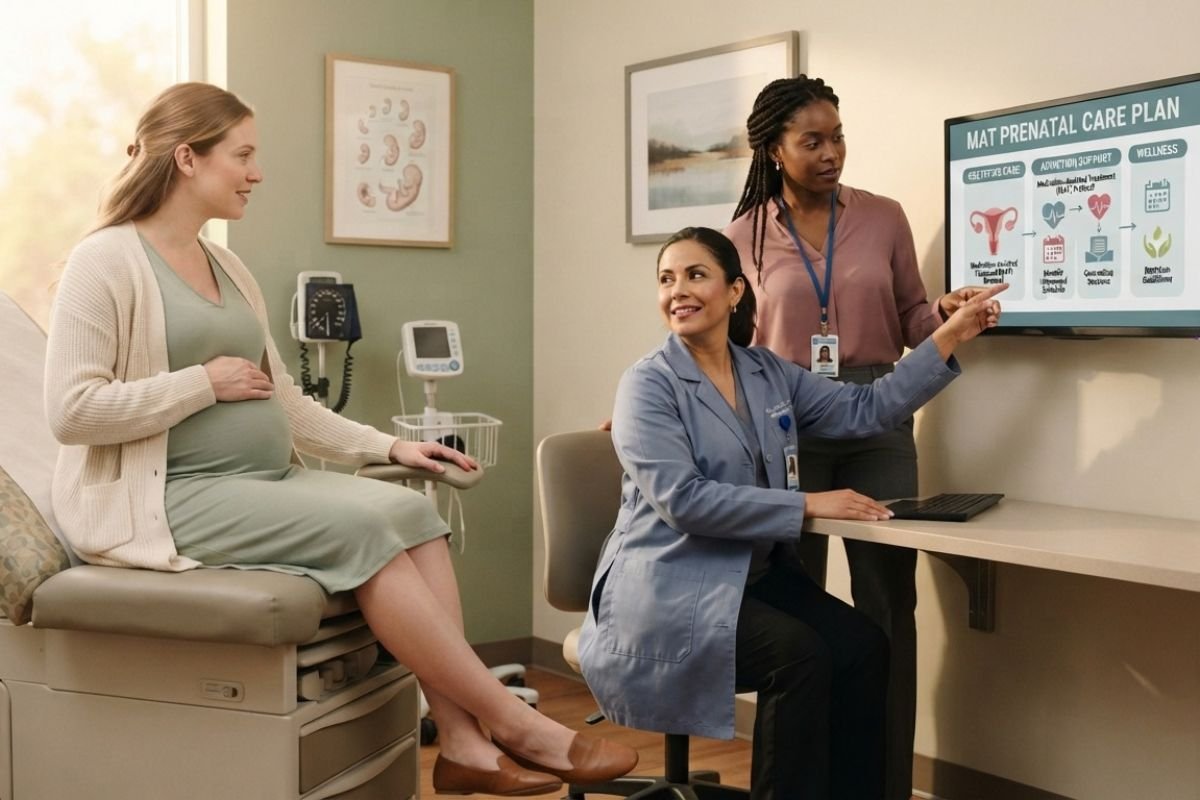
Pregnancy requires specialized, coordinated care.
For pregnant patients with opioid use disorder, current CDC guidance recommends buprenorphine or methadone rather than withdrawal management through opioid tapering. Treatment should be offered early because untreated OUD and return to opioid use can create serious risks for both the pregnant patient and fetus. CDC
Naltrexone is not generally the first medication initiated for OUD during pregnancy because pregnancy-safety evidence is more limited. Someone who becomes pregnant while already stable on naltrexone should discuss the risks and benefits of continuing or changing treatment with the clinical team rather than stopping independently.
Pregnancy can also affect how medications are managed over time, so prenatal and addiction-treatment clinicians should coordinate care.
Can MAT Be Used for People With Mental Health Conditions?
Yes.
Substance use disorders frequently occur alongside depression, anxiety, PTSD, bipolar disorder, or other mental health conditions.
Medication for the substance use disorder may be used while mental health needs are also treated.
The important issue is coordination.
If someone receives medications from multiple clinicians, the treatment team should know the complete medication list and relevant medical history.
Mental health symptoms may also affect substance use, treatment participation, sleep, safety, and recovery, so an integrated treatment plan can be helpful when both conditions are present.
The presence of a mental health condition does not automatically make someone ineligible for medication-based addiction treatment.
For more on coordinated care, see dual diagnosis treatment.
What Are the Benefits of Medication-Assisted Treatment?
The benefits depend on the disorder and medication being used.
For opioid use disorder, medication can reduce withdrawal and cravings, reduce illicit opioid use, improve retention in treatment, and reduce important health risks.
CDC reports that OUD medication treatment is associated with lower risk of overdose and overall mortality. CDC
For alcohol use disorder, medications may help reduce heavy drinking, support abstinence, reduce cravings, or discourage drinking depending on the medication.
Medication can also create stability that makes it easier to focus on physical health, relationships, housing, employment, mental health, and family responsibilities.
No medication guarantees recovery.
Are There Risks or Side Effects?
Yes.
Every medication has potential risks, side effects, contraindications, and interaction concerns.
The safety profile differs significantly between methadone, buprenorphine, naltrexone, acamprosate, and disulfiram.
Methadone and buprenorphine can cause sedation or breathing problems, particularly when combined with certain other substances.
Naltrexone blocks opioid receptors and therefore creates different considerations around opioid exposure and pain treatment.
Alcohol-use-disorder medications have their own medical considerations.
A general educational page should not be used to choose a medication, determine a dose, or decide when to start or stop treatment.
Does Insurance Cover Medication-Assisted Treatment?
Many health plans provide substance use disorder benefits, but actual coverage depends on the specific plan, provider, medication, pharmacy benefit, treatment setting, authorization requirements, network status, deductible, copayments, and coinsurance.
All Health Insurance Marketplace plans include mental health and substance use disorder services as essential health benefits, although exact benefits differ by plan and state. HealthCare.gov
Medicare also covers several forms of OUD treatment, including qualifying OTP services and office-based OUD treatment. CMS
Coverage should always be checked for the particular medication and provider rather than assuming that “MAT is covered” means every option will have the same patient cost.
How Much Does Medication-Assisted Treatment Cost?
There is no single national patient price.
Total cost can include medication, medical visits, counseling, laboratory testing, toxicology testing, psychiatric services, injections, pharmacy costs, and other treatment services.
Methadone treatment through an OTP has a different billing structure from office-based buprenorphine.
A long-acting injectable medication can also have a different medication cost from a generic daily tablet or film.
The more useful question is: “What will I likely pay for the specific medication and treatment services recommended for me?”
For broader cost information, see how much rehab costs.
How Do You Choose a Medication-Assisted Treatment Program?
A good treatment provider should be able to explain which substance use disorders it treats and which medications it provides or coordinates.
If opioid use disorder is involved, ask whether the program offers access to buprenorphine, methadone, naltrexone, or an appropriate referral when a medication is not available directly.
A program should not reject evidence-based medication simply because of an ideological belief that “real recovery” requires avoiding all medications.
At the same time, a program should not treat medication as the only part of care that matters.
Ask how medical needs, mental health, overdose risk, counseling preferences, housing, family issues, and continuing care are handled.
It is also important to understand what happens when the person's needs change.

Medication Access
Which evidence-based medications are provided directly or coordinated?
Long-Term Care
Can treatment continue as long as it remains clinically beneficial?
Mental Health
How are psychiatric conditions and multiple medications coordinated?
Overdose & Safety
How are naloxone, overdose risk, and ongoing substance use handled?
Changing Levels of Care
Can the provider coordinate residential, outpatient, or more intensive mental-health care when needed?
Questions to Ask Before Starting MAT
Common Myths About Medication-Assisted Treatment
Medication taken appropriately for a diagnosed substance use disorder is medical treatment. Physical dependence is not the same as uncontrolled addictive behavior.
Not always. The requirement depends on the medication. Naltrexone has different starting requirements from methadone or buprenorphine.
For OUD, no. Counseling can be valuable, but medication should not be delayed simply because counseling is unavailable or declined. CDC
There is no universal short treatment limit. OUD medications may continue for months, years, or longer when clinically beneficial. SAMHSA
Recovery is not defined by whether someone takes an evidence-based medication. The goal is improved health, safety, functioning, and control over the substance use disorder.
Why Is Access to Medication Treatment Still a Problem?
Medication treatment remains underused despite strong evidence and changing federal policy.
The 2024 NSDUH data show that only 17% of people aged 12 or older with past-year opioid use disorder received MOUD, while only 2.5% of people with alcohol use disorder received medication for AUD. SAMHSA
Federal policy has removed some barriers.
The X-waiver requirement for buprenorphine is gone, telehealth pathways have expanded, and newer OTP regulations give clinicians greater flexibility in treatment access and take-home decisions. SAMHSA
However, legal changes do not automatically mean that every community has easy access to every medication.
Availability can still vary widely by location and provider.
Frequently Asked Questions About Medication-Assisted Treatment
What does MAT stand for?
MAT stands for medication-assisted treatment. It traditionally refers to medication used alongside behavioral and supportive services for substance use disorders.
Is MAT the same as MOUD?
Not exactly. MOUD refers specifically to FDA-approved medication categories used to treat opioid use disorder. SAMHSA explains that the two terms should not be treated as exact synonyms. SAMHSA
What medications are used for opioid addiction?
FDA-approved medication categories for opioid use disorder are buprenorphine, methadone, and naltrexone. FDA
What medications are used for alcohol addiction?
Common FDA-approved alcohol-use-disorder medications include naltrexone, acamprosate, and disulfiram. SAMHSA
Is Suboxone MAT?
Suboxone contains buprenorphine and naloxone and is one medication product used to treat opioid use disorder.
Is methadone MAT?
Yes. Methadone is an FDA-approved medication for OUD and is generally provided for OUD through certified opioid treatment programs in the United States.
Can MAT help with fentanyl addiction?
Yes. Fentanyl-related opioid use disorder can be treated with evidence-based OUD medications. The appropriate medication and initiation approach should be determined clinically.
Do you have to go to rehab to receive MAT?
Not always. Medication treatment may be available through primary care, addiction medicine, outpatient programs, OTPs, telehealth, or other healthcare settings depending on the medication and the person's needs.
Can you get MAT through telehealth?
Some medication treatment can be initiated or continued through telehealth under applicable federal and state rules. Buprenorphine has specific federal telemedicine pathways, while methadone remains OTP-based. SAMHSA
Does MAT include counseling?
Counseling and other behavioral-health services may be included and can be useful, but for OUD medication should not automatically be withheld because counseling is unavailable or declined. CDC
Is detox required before MAT?
Not always. The requirement depends on the medication and clinical circumstances.
How long does MAT last?
There is no universal duration. OUD medications can continue for months, years, or longer when they remain appropriate and beneficial. SAMHSA
Is MAT safe during pregnancy?
For opioid use disorder during pregnancy, methadone and buprenorphine are recommended treatment options. Pregnancy treatment should be coordinated with qualified prenatal and addiction-care professionals. CDC
Does insurance cover MAT?
Many health plans cover substance use disorder treatment, but medication, provider, authorization, network, and patient-cost rules vary. Marketplace plans include substance use disorder services as essential health benefits. HealthCare.gov
Is medication-assisted treatment effective?
Medication treatment is evidence-based. For OUD, CDC reports that medication treatment is associated with reduced risk of overdose and overall mortality.
Explore Medication-Assisted Treatment Options
You do not need to choose a medication or treatment setting by comparing options on your own.
Treatment can be explored based on the substance involved, current use, withdrawal, health history, previous treatment, pregnancy when relevant, mental health, other medications, treatment access, location, and insurance.
Educational Information, Not a Medication-Start Plan
This page explains medication-assisted treatment, MOUD, MAUD, treatment settings, insurance, and recovery in general terms.
It should not be used to select a prescription medication, determine a dose, decide when to start or stop treatment, create an opioid-free interval, or replace individualized medical care.
Medication decisions involving buprenorphine, methadone, naltrexone, acamprosate, disulfiram, or other treatment should be made with an appropriately qualified healthcare professional.