

Find Drug & Alcohol Rehab Options That Fit Your Needs
Looking for addiction treatment for yourself or someone you care about? Find Drug Rehab Options helps you understand and explore detox, residential and inpatient treatment, outpatient programs, dual diagnosis care, medication-based treatment, insurance considerations, and recovery resources in one place.
You do not need to know exactly which type of treatment you need before starting your search. Addiction treatment is individualized, and the appropriate level of care can change according to a person's health, substance use, mental health, environment, and progress. ASAM's current standards use multidimensional assessment rather than a one-size-fits-all treatment model.
Find Drug Rehab Options is an educational and treatment-matching resource. We are not a treatment provider and do not diagnose, prescribe, or provide medical treatment.
A Simple Way to Explore Addiction Treatment Options
You do not need to understand every treatment term before beginning. Our goal is to help you understand the options available so you can make a more informed decision about what to explore next.
Tell Us What You're Looking For
Share basic information about the situation, such as your location, the substance involved, insurance status, and the type of treatment you may be considering. If you are unsure, select “Not Sure Yet.”
Explore Relevant Treatment Options
Learn about treatment settings, levels of care, insurance considerations, substance-specific services, mental health support, and recovery resources that may be relevant.
Decide What to Do Next
When you are ready, you can explore treatment programs, verify insurance benefits, or speak with a support specialist. There is no obligation to enter treatment simply because you requested information.
Understand the Addiction Treatment Continuum
Addiction treatment is not one single program. Different treatment settings provide different amounts of medical support, structure, clinical services, and time in treatment. ASAM defines a continuum of care and recommends matching the setting and intensity to the person's clinical needs, followed by reassessment as those needs change.
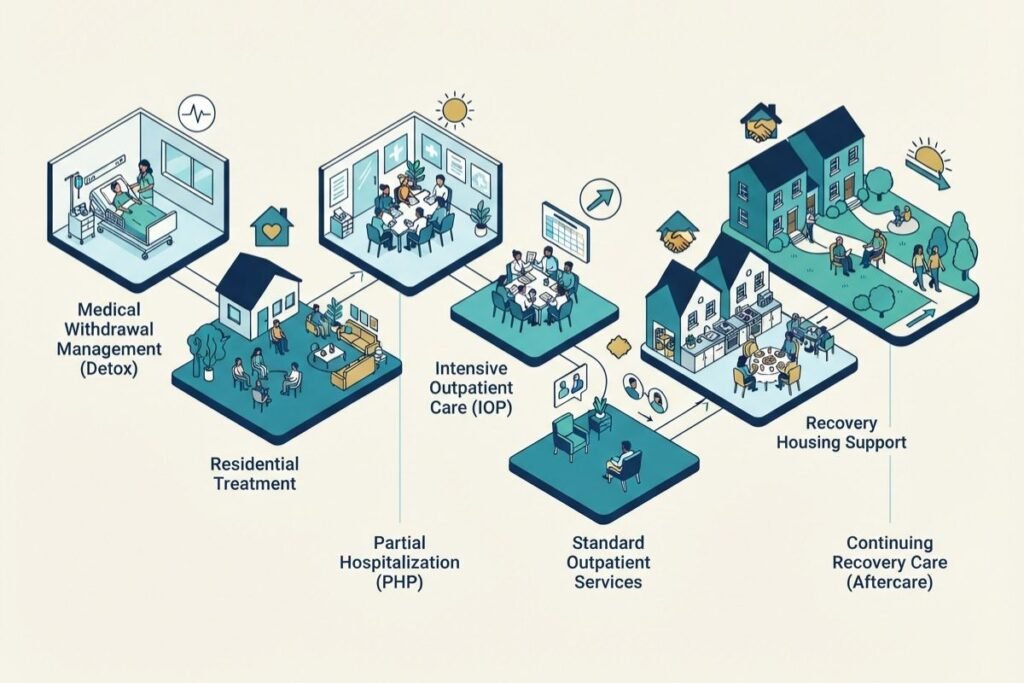
Medical Withdrawal Management / Detox
Withdrawal management, often called detox, focuses on safely managing withdrawal when it is clinically necessary. Not everyone entering treatment needs medical detox.
Learn About Drug Detox →Residential / Inpatient Treatment
Residential treatment involves staying in a treatment environment rather than returning home each night. The amount of medical and psychiatric support varies by program, and residential care should not automatically be treated as identical to hospital-level inpatient treatment.
Explore Inpatient Drug Rehab →Partial Hospitalization Program — PHP
A PHP provides a high level of structured treatment during scheduled daytime hours while generally allowing the person to live outside the program.
Intensive Outpatient Program — IOP
An IOP provides structured treatment several times per week without requiring someone to live at the treatment facility.
Standard Outpatient Treatment
Outpatient care can include scheduled counseling, group services, medication management, psychiatric services, or other addiction-treatment support while the person continues living in the community.
Explore Outpatient Drug Rehab →Recovery Housing / Sober Living
Recovery housing provides a substance-free living environment that may support someone during recovery. Recovery housing is a supportive living environment, not automatically a substitute for clinical addiction treatment.
Continuing Care
Treatment does not necessarily stop when residential or intensive care ends. Continuing services may include outpatient therapy, medication management, mental health services, recovery check-ins, peer support, or other community resources.
Explore Treatment by Substance
Different substances can involve different withdrawal risks, medical considerations, treatment medications, and behavioral approaches. Treatment should be based on an assessment rather than assuming the same approach applies to every substance or every person.
Alcohol
Alcohol use disorder can be treated with counseling, behavioral approaches, medications, and different levels of care. For people who have been drinking heavily over a prolonged period, suddenly stopping can sometimes cause dangerous withdrawal, so medical guidance may be necessary.
Opioids
Opioid use disorder can involve prescription opioids, heroin, fentanyl, or other opioids. Evidence-based treatment may include buprenorphine, methadone, or naltrexone, along with behavioral and recovery services according to individual needs.
Explore Opioid Treatment →Fentanyl
Fentanyl is a highly potent synthetic opioid. Pharmaceutical fentanyl has legitimate medical uses, while the majority of fentanyl-related overdose harms in the United States are associated with illegally made fentanyl.
Fentanyl Addiction and Treatment →Heroin
Heroin is an opioid, so treatment may involve medications for opioid use disorder, behavioral treatment, overdose-prevention planning, and appropriate residential or outpatient services.
Explore Heroin Treatment →Cocaine
Cocaine use disorder is commonly treated with behavioral interventions and counseling. Behavioral approaches including contingency management and cognitive-behavioral strategies have evidence supporting their use.
Explore Cocaine Treatment →Methamphetamine
There is currently no FDA-approved medication specifically for methamphetamine use disorder. Behavioral approaches—including contingency management—are important evidence-based treatment options.
Benzodiazepines
Benzodiazepine dependence and withdrawal require careful evaluation. Abruptly stopping certain sedative medications after dependence has developed can create serious risks, so treatment decisions should be made with qualified healthcare professionals.
Prescription Drugs
Problems can develop with prescription opioids, sedatives, stimulants, and other medications. Treatment depends on the drug involved, how it is being used, health conditions, and whether physical dependence or a substance use disorder is present.
The information above is general. Treatment and withdrawal needs should be determined by qualified healthcare professionals.

Understand Rehab Costs and Insurance Coverage
Cost is one of the biggest practical questions people have before seeking addiction treatment. There is no single price for rehab. Costs can change according to the level of care, treatment duration, clinical services, medical needs, provider network, location, and insurance benefits.
Does Insurance Cover Rehab?
Many health plans include substance use disorder benefits, but the exact services covered and the amount a patient pays vary by policy. Marketplace health plans include mental health and substance use disorder services among essential health benefits, but individual plan details and cost-sharing still vary.
Private Insurance
Employer and individual health plans may cover services such as counseling, behavioral healthcare, inpatient services, or substance use disorder treatment depending on the policy. Do not assume that every facility or every treatment duration is covered.
Medicare
Medicare covers certain mental health and substance use disorder screenings, inpatient services, outpatient services, and treatment programs for eligible beneficiaries. Exact rules depend on the service and setting.
Medicaid
Medicaid plays a major role in behavioral-health coverage, but service design, participating providers, and benefit delivery can vary by state and program.
In-Network vs. Out-of-Network
In-network providers generally operate under contracted rates with an insurer. Out-of-network care can result in different or higher patient costs depending on the plan.
Rehab Without Insurance
Treatment may still be available without private insurance. SAMHSA identifies potential options such as sliding-fee programs, payment plans, grants, scholarships, charity-care programs, community health centers, and state-supported resources.
Insurance verification is not a guarantee of coverage, authorization, admission, or final patient cost.
Find Drug and Alcohol Rehab Options Near You
Available treatment services, Medicaid programs, provider networks, and local resources can differ depending on where you live. Choose your state to explore addiction-treatment information and options relevant to your location.
Featured States
View All 50 States
You can also explore detox, residential treatment, outpatient care, dual diagnosis programs, and insurance information by location.
When Substance Use and Mental Health Conditions Occur Together
A person can experience a substance use disorder and a mental health disorder at the same time. These are commonly called co-occurring disorders or a dual diagnosis. SAMHSA recommends integrated treatment because coordinating mental-health and substance-use care can improve the quality of care and outcomes.

Dual Diagnosis / Co-Occurring Disorders
Integrated treatment considers both conditions within the overall care plan instead of automatically treating them as unrelated problems.
Addiction and Depression
Depression and substance use can occur together and may affect treatment needs, safety, functioning, medications, and recovery planning.
Addiction and Anxiety
Anxiety disorders can coexist with substance use disorders. Assessment can help distinguish ongoing anxiety conditions from symptoms related to intoxication, withdrawal, medications, or other health factors.
Addiction and Trauma-Related Symptoms
Trauma-related symptoms may be relevant for some people in addiction treatment. Trauma-informed care means treatment should recognize and respond appropriately when trauma is relevant.
Addiction and Bipolar Disorder
Bipolar disorder and substance use disorders can occur together and may require coordinated psychiatric and addiction treatment.

Common Approaches Used in Addiction Treatment
There is no single treatment method that is appropriate for every person. SAMHSA notes that combinations of behavioral therapies, medications, and recovery supports can be tailored to individual needs and may change over time.
Behavioral & Supportive Approaches
Individual Counseling
One-to-one sessions can address substance use patterns, personal goals, coping skills, relationships, and recovery challenges.
Cognitive and Behavioral Approaches
These approaches can help people understand connections between thoughts, emotions, behaviors, triggers, and substance use.
Motivational Approaches
Counseling may help people explore uncertainty about change and strengthen personal reasons for pursuing recovery.
Group Treatment
Groups can provide clinical education, skills development, discussion, and structured support with other participants.
Family Services
Family education or therapy may be appropriate when involvement is helpful, safe, and consistent with the person's preferences.
Peer Recovery Support
Peer services can provide support from people with lived recovery experience alongside—not instead of—clinical treatment when clinical care is needed.
Medication-Based Treatment
Medication can be an important evidence-based treatment for certain substance use disorders.
Common FDA-approved medications include buprenorphine, methadone, and naltrexone.
Common medication options include acamprosate, disulfiram, and naltrexone.
Medication can be combined with counseling and behavioral therapies as part of a whole-person approach.
Medication decisions should be made with appropriately qualified healthcare professionals.
Learn About Medication-Assisted Treatment →Helping Someone You Care About Find Addiction Treatment
Trying to help a family member, partner, or friend with substance use can be difficult—especially when you do not know what type of treatment they may need. You can begin by gathering reliable information about treatment options, cost, insurance, and available programs.

Signs That Professional Assessment May Be Worth Considering
Concerns can include significant changes in health, responsibilities, relationships, behavior, substance use, safety, or ability to function. Avoid treating these signs as a diagnostic checklist.
Talking About Treatment
A calm conversation focused on specific concerns is usually more constructive than labeling, shaming, or trying to diagnose the person yourself.
Researching Treatment on Someone Else's Behalf
Family members can compare treatment types, insurance information, and program services even if the person is not ready to make a call yet.
Family Therapy & Education
Some programs offer family counseling or education to improve communication, clarify boundaries, and prepare for recovery outside treatment.
Healthy Boundaries
Supporting someone does not mean becoming responsible for their recovery or sacrificing your own safety and wellbeing.
Intervention Resources
Some families work with trained professionals when they want structured guidance about approaching treatment. An intervention is not required for someone to seek help.

Recovery Support After Rehab
Completing an inpatient, residential, or intensive treatment program can be an important transition, but recovery support often continues afterward. SAMHSA describes recovery as an ongoing process through which people improve health and wellness and work toward a self-directed life.
Continuing-Care Planning
A treatment program should consider what comes next before the current level of care ends.
Ongoing Counseling
Outpatient counseling can help address new challenges, mental health needs, recovery goals, and changing circumstances.
Recovery Support Groups
Some people choose mutual-support programs such as 12-step groups, SMART Recovery, or other community-based options. Different approaches fit different people.
Peer Support
Peer-recovery services can provide ongoing connection and practical support.
Recovery Housing
A substance-free living environment may provide additional structure during the transition back to independent living.
Relapse / Return-to-Use Planning
Treatment can help people identify triggers, warning signs, and what to do when recovery becomes more difficult.
Alumni Programs
Some treatment organizations offer optional continuing communities, check-ins, or events for former patients.
Safety and Overdose Prevention
Recognizing a Possible Opioid Overdose
CDC identifies possible signs including unconsciousness or inability to wake, slow or shallow breathing, choking or gurgling sounds, discoloration around lips or nails, and very small pupils.
Naloxone
Naloxone can temporarily reverse an opioid overdose. If an opioid overdose is suspected, CDC advises giving naloxone if it is available and calling 911. The person should not be left alone.
Fentanyl Risk
Illegally made fentanyl can be mixed into heroin, cocaine, methamphetamine, or counterfeit pills without the person's knowledge. Learn about fentanyl addiction and treatment.
Polysubstance Risk
Exposure to more than one drug can be intentional or unintentional. Combining substances can make effects less predictable and increase overdose risk.

What to Look for in an Addiction Treatment Program
Licensing
Ask whether the facility is appropriately licensed for the services it provides.
Clinical Qualifications
Ask who delivers medical, counseling, psychiatric, and medication-related care.
Appropriate Level of Care
The program should be able to explain why its level of care fits the person's needs.
Evidence-Based Services
Ask which therapies, medications, and clinical approaches the program uses.
Individualized Treatment Planning
Treatment should reflect the person's needs instead of only a standard program schedule.
Mental Health Capability
Ask how the program identifies and addresses co-occurring mental health conditions.
Medication Access
For conditions such as opioid use disorder, ask whether appropriate medications are provided or coordinated.
Family Services
Ask whether family involvement is available when appropriate.
Continuing Care
A program should be able to explain what happens after discharge.
Transparent Costs
Ask what is included, what may be billed separately, and what insurance is expected to cover.
Learn About Addiction Treatment
What Is Drug Rehab?
A clear introduction to what addiction treatment can include, how levels of care differ, and what happens before and after treatment.
How Does Rehab Work?
Follow the rehab process from initial contact and assessment through therapy, medications, progress reviews, discharge, and continuing care.
How Much Does Rehab Cost?
Understand what affects treatment costs, how inpatient and outpatient pricing can differ, and what you may need to ask before admission.
Does Insurance Cover Rehab?
Learn how networks, authorization, deductibles, coinsurance, and plan-specific benefits can affect addiction-treatment coverage.
Inpatient vs. Outpatient Rehab
Compare residential and outpatient treatment settings, structure, daily routines, and the situations in which each may be considered.
Read Guide →Detox vs. Rehab — What’s the Difference?
Understand what withdrawal management does, why it is different from ongoing addiction treatment, and what may happen afterward.
Fentanyl Addiction and Treatment
Learn about fentanyl-related opioid use disorder, evidence-based medications, withdrawal, overdose prevention, and treatment options.
Read Guide →What Is Dual Diagnosis Treatment?
Learn how treatment can address a substance use disorder and a co-occurring mental health condition within a coordinated care plan.
Read Guide →Addiction Treatment Information With Clear Sources and Disclosures
Find Drug Rehab Options is designed to help people understand addiction treatment, insurance considerations, levels of care, and recovery resources before deciding what to explore next.
Treatment Information in One Place
Learn about detox, residential treatment, outpatient programs, mental health care, medications, insurance, cost, and recovery support without having to interpret dozens of unfamiliar treatment terms.
Nationwide Navigation
Explore treatment information by state and treatment type.
Insurance Guidance
Understand common insurance terms and questions to ask before entering treatment.
Family Resources
Use dedicated information for people searching on behalf of a family member or loved one.
Educational — Not Medical Advice
Our educational content does not replace an assessment, diagnosis, or treatment recommendation from a qualified healthcare professional.
Frequently Asked Questions About Drug and Alcohol Rehab
1. What is drug rehab?
Drug rehab is structured treatment for people experiencing problematic drug use or a substance use disorder. It can involve assessment, counseling, behavioral treatment, medications, mental health services, residential care, outpatient care, and continuing support.
2. What is alcohol rehab?
Alcohol treatment can include counseling, behavioral therapies, medications, outpatient or residential services, and withdrawal management when clinically necessary. People with a history of prolonged heavy drinking should seek medical guidance before suddenly stopping because alcohol withdrawal can sometimes become dangerous.
3. How do I know whether addiction treatment may be needed?
Professional assessment may be worth considering when substance use is becoming difficult to control or is repeatedly affecting health, safety, relationships, responsibilities, work, or daily functioning. A website cannot diagnose a substance use disorder.
4. What is the difference between detox and rehab?
Detox focuses primarily on withdrawal management and medical stabilization when needed. Rehab addresses the broader substance use disorder through services such as counseling, behavioral treatment, medications, mental health services, and continuing-care planning. Not everyone needs detox.
5. What is inpatient rehab?
Inpatient or residential treatment involves staying in a treatment setting and receiving structured services there. The amount of medical support varies by facility and level of care.
6. What is outpatient rehab?
Outpatient treatment allows someone to receive scheduled addiction services while continuing to live outside the facility.
7. What is dual diagnosis treatment?
Dual diagnosis treatment addresses a substance use disorder and a co-occurring mental health condition within a coordinated care plan.
8. How long does rehab last?
There is no universal duration. ASAM recommends basing treatment length on clinical needs, progress, and reassessment rather than automatically using one fixed number of days.
9. How much does rehab cost?
Treatment prices vary according to level of care, location, services, duration, insurance, and other factors.
10. Does insurance cover rehab?
Many health plans provide substance use disorder benefits, but coverage differs by policy, network, service, authorization rules, and patient cost-sharing.
Ready to Explore Addiction Treatment Options?
Explore treatment options for yourself or someone you care about based on location, level of care, and insurance needs.