
Drug Detox Programs: What to Expect, Withdrawal Care, and Next Steps
Medical detox, also called withdrawal management, is care designed to help someone safely manage the physical and psychological effects that can occur when alcohol or drugs are reduced or stopped.
Depending on the substance, pattern of use, health conditions, medications, and withdrawal risk, detox may involve medical monitoring, symptom management, medications, hydration, nutrition support, and planning for continued addiction treatment.
Detox is not the same as complete addiction treatment. Its primary role is usually to help manage withdrawal and stabilize the person so ongoing treatment can continue.
Educational Resource • Treatment Options • No Obligation
Find Drug Rehab Options provides educational information and treatment-matching support. We are not a medical provider and do not diagnose, prescribe, or provide withdrawal treatment.

What Is Medical Drug Detox?
Medical detox is the process of managing withdrawal while alcohol or drugs leave the body, with healthcare support when it is clinically appropriate.
Withdrawal-management programs may monitor physical symptoms, mental health symptoms, vital signs, hydration, medications, and other medical concerns.
Detox primarily addresses withdrawal and stabilization. It does not, by itself, address all of the behavioral, psychological, social, and recovery needs associated with a substance use disorder.
Is Detox the Same as Drug Rehab?
No. Detox and rehab are connected, but they serve different purposes.
DETOX
Primary focus: Withdrawal management
May involve: medical monitoring, symptom management, medications, and stabilization.
Main goal: help the person safely move through the immediate withdrawal phase when support is needed.
DRUG REHAB
Primary focus: broader treatment for substance use disorder
May involve: counseling, behavioral treatment, medication treatment, mental health care, recovery planning, and continuing care.
Main goal: address the larger pattern of substance use and support longer-term recovery.
A person may feel physically better after withdrawal symptoms improve, but ongoing addiction treatment may still be needed.
What Are the Main Types of Drug Detox Programs?
Not everyone requires the same detox setting. The appropriate environment depends on the substance involved, withdrawal risk, physical health, mental health, other substances being used, medications, home environment, and available support.
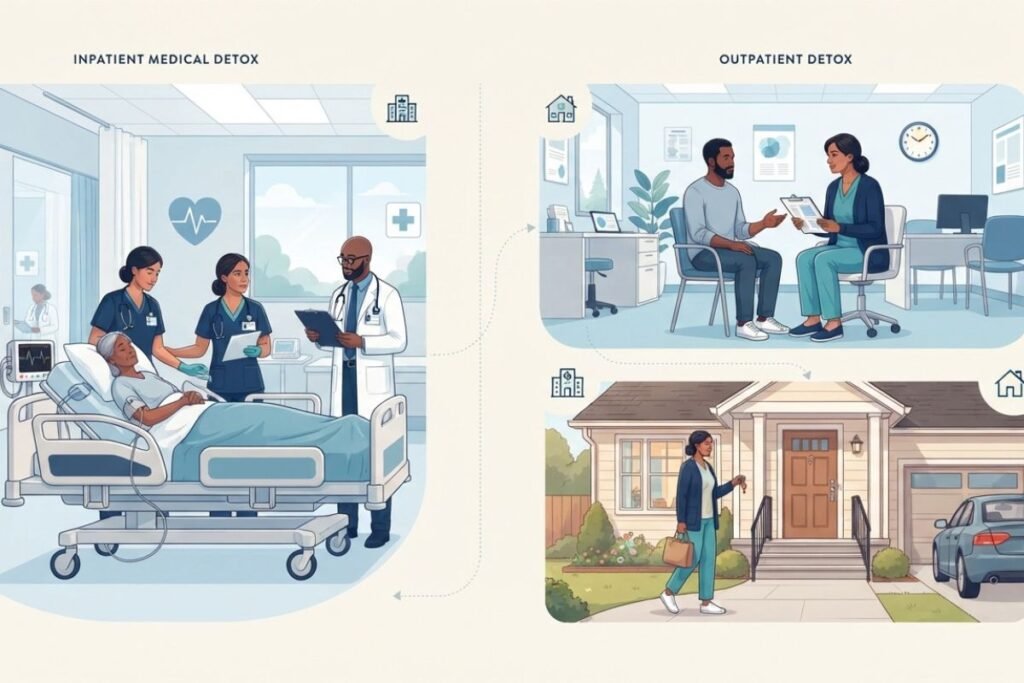
Inpatient / Residential Medical Detox
Inpatient or residential withdrawal management involves staying at a treatment or healthcare facility while withdrawal is monitored. This may be considered when someone needs closer monitoring, greater structure, medical support, or a setting away from their usual environment. The exact staffing and medical capabilities vary by facility.
Outpatient / Ambulatory Detox
In outpatient withdrawal management, the person continues living outside the facility while attending scheduled appointments for monitoring and treatment. Some programs may involve regular check-ins, medication management, vital-sign monitoring, and reassessment. Outpatient withdrawal management is not appropriate for every situation.

What Happens During Medical Detox?
Although programs differ, detox commonly involves three broad stages.
Evaluation and Clinical Assessment
Before treatment begins, the team may review substance use, recent use, withdrawal history, medical conditions, current medications, mental health symptoms, previous treatment, and immediate safety concerns. Depending on the program, assessment may also involve vital signs, laboratory testing, drug screening, or standardized withdrawal-assessment tools. The goal is to understand the person's current risk and treatment needs.
Stabilization and Symptom Management
During withdrawal, healthcare professionals may monitor symptoms and provide supportive or medical treatment. Depending on the substance and individual situation, this can include medications, hydration, nutrition support, monitoring heart rate or blood pressure, sleep support, and management of other withdrawal symptoms. The goal is to help manage risks, symptoms, and stability appropriately.
Transition and Continuing-Care Planning
Detox should not leave someone asking: “What do I do now?” A discharge plan may connect the person with residential rehab, partial hospitalization, intensive outpatient treatment, standard outpatient care, medication treatment, mental health services, or other recovery resources.
Can Medication Be Used During Drug Detox?
Yes. Medication may be used during withdrawal management depending on the substance involved, symptoms, withdrawal severity, medical history, and clinical judgment. Medication should be selected and managed by appropriately qualified healthcare professionals.

Opioid Withdrawal and Opioid Use Disorder
Medications such as buprenorphine and methadone may be used as part of treatment for opioid use disorder and can also affect withdrawal and cravings. Other medications may sometimes be used to help manage specific withdrawal symptoms.
Important distinction: medication for opioid use disorder can continue beyond detox.
Learn About Medication-Assisted Treatment →Alcohol Withdrawal
Medication may be used to help manage alcohol withdrawal and reduce complications when clinically appropriate. Treatment depends on withdrawal severity, previous withdrawal history, medical conditions, medications, and other risk factors.
Benzodiazepine Withdrawal
Benzodiazepine withdrawal can require carefully managed medication reduction or other medical treatment. A person should not create their own taper based solely on online information.
This page explains treatment; it is not a dosing or self-detox guide.
How Does Withdrawal Differ by Substance?
Withdrawal varies significantly according to the substance, how much is being used, how often, duration of use, other substances, medical health, and individual physiology.
Alcohol Withdrawal
Alcohol withdrawal can involve tremor, sweating, anxiety, sleep disturbance, nausea, changes in heart rate, and other symptoms. More severe alcohol withdrawal can involve seizures, significant confusion, hallucinations, or delirium tremens.
People with significant alcohol dependence or previous severe withdrawal should seek professional medical guidance rather than assuming abrupt withdrawal can be safely managed alone.
Opioid and Heroin Withdrawal
Opioid withdrawal can involve muscle aches, restlessness, sweating, nausea, vomiting, diarrhea, sleep problems, and strong cravings.
Withdrawal can be very uncomfortable, and opioid use disorder may require ongoing treatment after acute symptoms improve.
Fentanyl Withdrawal
Fentanyl-related withdrawal can be difficult to predict because patterns of exposure vary considerably. Treatment planning may also be affected by recent fentanyl use, other opioids, other substances, previous treatment, and medication decisions.
Fentanyl Addiction and Treatment →Benzodiazepine Withdrawal
Benzodiazepine withdrawal can become medically serious and may involve anxiety, sleep problems, tremor, sensory changes, and seizures in some circumstances.
Professional guidance is particularly important for people who have developed physical dependence.
Stimulant Withdrawal
Withdrawal from substances such as cocaine or methamphetamine can differ from alcohol or sedative withdrawal. Symptoms may include fatigue, sleep changes, low mood, increased appetite, cravings, and emotional or psychological symptoms.
Mental health monitoring can become especially important if severe depression, hopelessness, or suicidal thoughts occur.
Can Withdrawal Symptoms Continue After the Acute Phase?
Some people report persistent or recurring symptoms after the most intense withdrawal phase has passed. These can involve sleep problems, mood changes, difficulty concentrating, anxiety, and cravings.
The pattern differs from person to person and from substance to substance. Persistent symptoms should be discussed with an appropriate healthcare professional rather than automatically assuming every symptom is caused by withdrawal.

When Is Withdrawal a Medical Emergency?
Withdrawal or substance-related complications can sometimes require emergency care.
Concerning Signs Can Include
- Seizures
- Loss of consciousness
- Severe or persistent confusion
- Hallucinations with severe instability
- Difficulty breathing
- Slowed or stopped breathing
- Severe dehydration
- Serious chest or cardiovascular symptoms
Opioid overdose: If opioid overdose is suspected and naloxone is available, administer it according to the product instructions and call emergency services.
Learn About Fentanyl and Overdose Risk →Can You Detox at Home?
That depends on the substance and individual circumstances. Some withdrawal situations may be manageable with outpatient medical support. Others can involve significant medical risks.
The problem with a general statement such as “Just stop using and wait it out at home” is that a website cannot determine a person's withdrawal risk.
Outpatient Support May Be Possible in Some Situations
Some people can receive scheduled medical monitoring outside a residential setting when a qualified clinician determines that the risks can be managed safely.
Situations That May Require Closer Medical Evaluation
- Substantial alcohol dependence
- Benzodiazepine dependence
- Previous severe withdrawal
- Previous withdrawal seizures
- Significant medical conditions
- Multiple substances being used
- Serious mental health symptoms
- Pregnancy
- Uncertain or changing drug supply
If you are concerned about withdrawal, contact an appropriate healthcare professional or withdrawal-management program for individual guidance.
What Is Rapid or Ultra-Rapid Opioid Detox?
What Some Programs Claim
Some programs have marketed approaches intended to accelerate opioid withdrawal, sometimes involving sedation or anesthesia. These approaches should not be confused with standard evidence-based opioid use disorder treatment.
Questions to Ask
- What evidence supports the procedure?
- What medical risks are involved?
- Who provides anesthesia and monitoring?
- What treatment continues afterward?
- Are medications for opioid use disorder offered?
- Does insurance cover the service?
How Much Does Medical Detox Cost?
There is no single nationwide detox price. Cost can vary based on inpatient vs. outpatient setting, medical services, length of care, medications, location, insurance network, and treatment complexity.
Does Insurance Cover Detox?
Some insurance plans provide benefits for substance use disorder treatment and withdrawal-management services, but exact coverage depends on the plan and service. Potential factors include network status, authorization, deductible, copayment, coinsurance, and clinical-coverage rules.

Private Insurance
Coverage can vary significantly by plan and provider.
Medicare / Medicaid
Coverage depends on eligibility, state program, facility participation, and the services being provided.
No Insurance
Possible options may include sliding-scale care, payment arrangements, state-supported programs, community resources, or other financial-assistance options.
Insurance verification does not guarantee authorization, coverage, admission, or final patient cost.

What If You Are Looking for Detox for Someone You Care About?
Family members often begin researching treatment before the person who needs care is ready to make a call. You can help by gathering useful information without trying to become the person's medical provider.
Watch for Signs of an Emergency
Seek emergency help when someone is having a seizure, unconscious, unable to breathe normally, severely confused, or otherwise in immediate danger.
Talk About Treatment Calmly
Focus on specific concerns rather than blame, shame, threats, or trying to diagnose the person yourself.
Prepare Important Information
When appropriate, it may help to have insurance information, a list of current medications, basic health history, known substances being used, and emergency contacts.
Detox Should Connect to Ongoing Treatment
Completing withdrawal management can be an important step. But improvement in withdrawal symptoms does not necessarily mean the substance use disorder has been fully treated. Depending on the person's needs, the next step could involve:

Inpatient / Residential Rehab
Structured treatment in a residential environment.
Explore Inpatient Drug Rehab →Outpatient Treatment
Treatment while continuing to live outside the facility.
Explore Outpatient Drug Rehab →Dual Diagnosis Treatment
Coordinated treatment when mental health and substance use disorders occur together.
Explore Dual Diagnosis Treatment →Medication-Based Treatment
Medications may be part of ongoing treatment for certain substance use disorders.
Explore Medication-Assisted Treatment →What Should You Look for in a Drug Detox Program?
Appropriate Medical Capability
Ask what type of withdrawal the facility is equipped to manage.
Qualified Healthcare Staff
Ask who monitors symptoms and manages medications.
Clear Assessment Process
The facility should be able to explain how withdrawal risk is evaluated.
Emergency Capability
Ask what happens if symptoms become more severe.
Medication Options
If medication may be relevant, ask which services are provided directly and which require outside care.
Continuing-Care Planning
The program should explain what happens after detox rather than ending care without a next-step plan.
Questions to Ask a Detox Program
Need Help Exploring Detox and Addiction Treatment Options?
You do not need to determine your withdrawal risk or level of care on your own. You can explore detox, residential treatment, outpatient care, medication-based treatment, mental health services, and other addiction-treatment options based on your situation.
Exploring treatment options does not guarantee admission, a particular clinical recommendation, insurance coverage, or final patient cost.
Frequently Asked Questions About Drug Detox Programs
How long does drug detox take?
There is no universal detox duration. The time required depends on the substance, physical dependence, recent use, health conditions, medications, symptoms, and treatment setting. Avoid assuming every detox program should last a fixed number of days.
Is drug detox covered by insurance?
Some health plans provide benefits for withdrawal-management and substance use disorder treatment. Coverage varies according to the individual plan, provider, network, authorization rules, and services received.
What is the difference between detox and rehab?
Detox primarily focuses on withdrawal management and stabilization. Rehab addresses the broader substance use disorder through treatment such as counseling, behavioral services, medication, mental health care, and recovery planning.
Can I detox at home?
Some people may receive outpatient withdrawal management, but certain withdrawal situations can become medically serious. A healthcare professional can help determine whether outpatient or inpatient treatment may be appropriate.
What medications are used during detox?
Medication depends on the substance, symptoms, withdrawal risk, health history, and treatment plan. Medication decisions should be made by qualified healthcare professionals.
Is detox required before rehab?
No. Not everyone entering addiction treatment requires a separate detox phase. Whether withdrawal management is needed depends on individual circumstances.
Can detox treat opioid addiction?
Detox can address withdrawal, but opioid use disorder may require ongoing treatment. Medications such as buprenorphine, methadone, or naltrexone may be part of ongoing evidence-based care.
Is alcohol withdrawal dangerous?
Alcohol withdrawal can become medically serious in some circumstances, including seizures or severe confusion. People with significant physical dependence or previous severe withdrawal should seek professional medical guidance.
Is benzodiazepine withdrawal dangerous?
Benzodiazepine withdrawal can involve serious risks, including seizures in some situations. People who may be physically dependent should not use website information as a self-directed withdrawal plan.
What happens after detox?
The next step may include residential rehab, outpatient treatment, medication-based treatment, mental health care, or another appropriate level of addiction treatment.
Can I bring my phone to detox?
Facility policies vary. Some programs allow phones under certain conditions, while others restrict devices during parts of treatment. Ask the individual program before admission.
How do I choose a detox program near me?
Compare medical capability, staff qualifications, withdrawal services, medication options, emergency procedures, insurance participation, and how the program connects patients to ongoing treatment.
Continue Learning About Addiction Treatment
What Is Drug Rehab?
Understand what addiction treatment can include beyond withdrawal management.
How Does Rehab Work?
See what happens from assessment through ongoing treatment.
Inpatient Drug Rehab
Learn how residential treatment works after detox when more structure is needed.
Read Guide →Outpatient Drug Rehab
Understand how treatment can continue while someone lives outside a facility.
Read Guide →Fentanyl Addiction and Treatment
Learn about fentanyl-related opioid use disorder, medications, withdrawal, and overdose prevention.
Read Guide →Dual Diagnosis Treatment
Learn how addiction and mental health treatment can be coordinated.
Read Guide →Medical Disclaimer
This page provides general educational information about withdrawal management and addiction treatment. It is not intended to diagnose withdrawal severity, provide medication instructions, create a taper schedule, or recommend an individualized detox plan.
Questions about withdrawal, alcohol or drug use, medication, medical conditions, or appropriate treatment should be discussed with qualified healthcare professionals.
If someone is unconscious, having a seizure, experiencing severe confusion, having difficulty breathing, or may be experiencing an overdose or another medical emergency in the United States, call 911 immediately.
If someone is experiencing a mental health, suicide, or substance-use crisis in the United States, call or text 988.